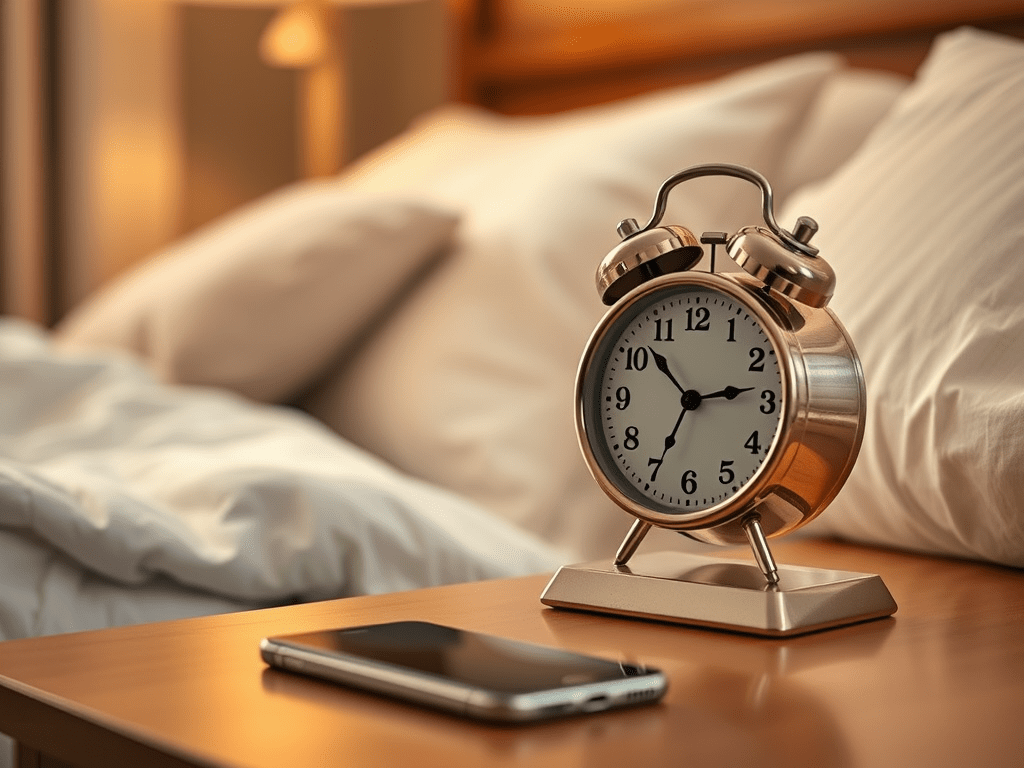
How removing my phone from the bedroom improved my sleep, focus, and mental clarity
I hate that sound so much.
My alarm seems never-ending as I fumble around for my phone to shut it off. The covers are warm. I can feel myself drifting back into the dream I was having just moments before… Ding! Who’s messaging me this early? I groan, toss the covers back, and roll out of bed, groggy. Again.
Since I was 15—back before smartphones—I’ve had a cell phone by my bedside. It was my alarm clock, my entertainment, my escape. It was also my gateway to things I’d rather avoid. For years, it gave me easy access to porn, numbed late-night thoughts, and let me mentally check out of my own life.
So why did buying a $10 alarm clock change everything?
It seems like such a small thing. But this one decision radically improved my sleep, focus, and sense of peace. And it all started because I wanted to reclaim my mornings—and my mind.
Why alarm clocks disappeared
There’s a word from evolutionary science called “exaptation.” It describes something that was designed for one purpose but ends up getting used for something completely different.
Text messaging, for example, was created to help engineers test networks. Now it’s one of the most used communication tools in the world.
Smartphones were originally designed to combine phones, computers, cameras, and calendars. Somewhere along the way, they also replaced alarm clocks.
Because they were easy. Reliable. Lazy.
But that convenience comes at a cost.
Why using your phone as an alarm is a trap
I didn’t just use my phone to wake up. I used it to wind down, too. I’d scroll until I was too tired to think. I’d wake up to a flood of notifications. My brain didn’t get rest. It got hijacked.
Phones aren’t neutral—they’re designed to stimulate. The blue light keeps us awake. The dopamine loops train our brains to stay plugged in. The constant access keeps our minds too busy to settle.
A meta-analysis of 21 studies showed a clear link between nighttime phone use and reduced sleep quality, fatigue, poor diet, lower immunity, mental health issues, and more (Carter et al., 2016). It’s not a mystery why you feel worse when your phone is your last and first interaction each day.
I wanted better.
I wanted to know what I could become with real sleep. How strong I could get. How clear I could think. How present I could be in my life. And maybe most of all—I wanted to know what my own thoughts sounded like again.
What changed when I got an alarm clock
I fell asleep faster and felt more rested
I woke up peacefully, not anxiously
I separated rest from productivity
I owned my mornings again—instead of my phone owning me
I recovered from workouts faster
I retained more from what I read
The unexpected benefits
I doomscroll less at night
My phone usage dropped and became more intentional
I wake up more energized—strong as an oak, as I like to say
I read more or just enjoy silence
I feel more mentally clear and make better decisions at night
Sleep is a force multiplier. Better sleep helped me become a better version of myself. And it started with this one small change.
Why it’s hard to break the habit
The first night without my phone was hard, but not the hardest. That came around week three, when I got lazy and let it creep back into my bedroom. That’s the nature of habits—they fight back.
Phones feel convenient. They’re our flashlight, alarm, social connection. And FOMO is real. Being unreachable at night triggers low-level anxiety, especially if you’re used to having access to the world 24/7.
What helped me stay consistent
I took the charger out of my room
I watched long-form YouTube on the TV, not my phone
No TikTok, Shorts, or Reels
I set a loose but consistent bedtime
I took 1–2 mg of melatonin about two hours before sleep
I replaced scrolling with journaling, prayer, or reading
Contingency planning was key. I didn’t need to be perfect. I just needed to be ready to pivot when I got off track.
Try it for yourself
Buy a basic alarm clock (cheap ones work fine)
Charge your phone in another room—or at least across the room
Replace phone time with something calming
Commit to one week and see what happens
Final thoughts
I often tell people that change should feel stupidly simple. So simple you roll your eyes and say, “Well, of course I can do that.”
We’ve all heard the phrase, “You are your own worst enemy,” but few of us know what that really means. For me, this quote captures it best:
The ego demands grandeur. The heart whispers for consistency.
You don’t need a big dramatic overhaul. You just need a small step in the right direction. Lay one stone. Build one habit. Sleep better for one week.
You might never go back.
Source
Carter B., Rees P., Hale L., Bhattacharjee D., & Paradkar M. S. (2016). Association between portable screen-based media device access or use and sleep outcomes: A systematic review and meta-analysis. JAMA Pediatrics, 170(12), 1202–1208. https://doi.org/10.1001/jamapediatrics.2016.2341
 Alec Capel
Leave a comment